
If you are asking how long do full mouth dental implants last, you are probably not looking for a vague answer. You want to know whether this is a long-term fix, what might need replacement over time, and whether the investment makes sense compared with dentures or repeated dental work. The honest answer is that full mouth dental implants can last for many years, and in many cases decades, but different parts of the treatment have different lifespans.
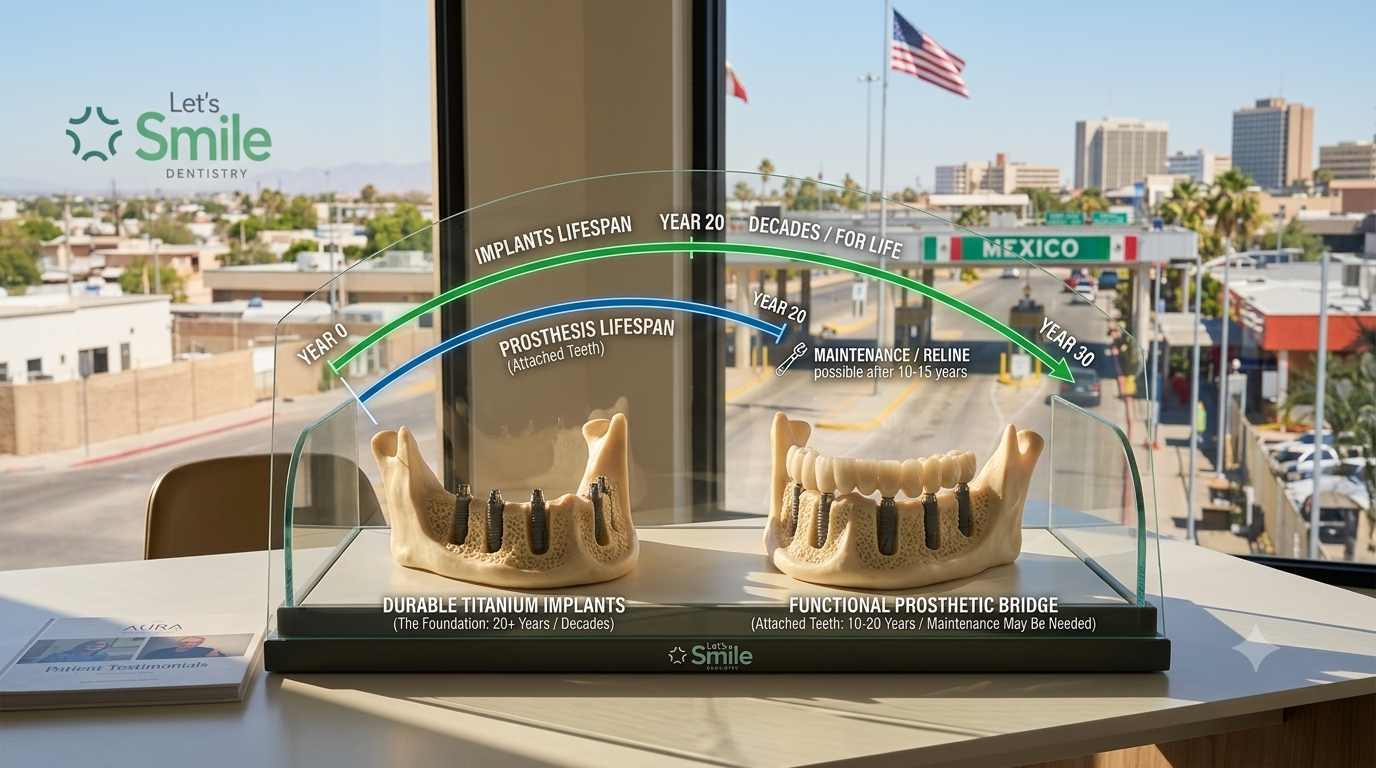
That distinction matters. The implants placed in the bone often last much longer than the teeth attached to them. A patient may keep the same implants for 20 years or more, while the prosthetic bridge, depending on the material, bite forces, and maintenance, may need repair or replacement sooner. When a practice is transparent about that from the beginning, patients can make better decisions and avoid surprises later.
How long do full mouth dental implants last in real life?
For most patients, the implant posts themselves are designed to be a long-term foundation. With proper placement, healthy bone support, and consistent maintenance, they can last 20 years or longer. Many patients keep them for life. That is one reason full arch implant treatment is often considered a more stable solution than removable dentures.
The restoration on top is different. If you have an All-on-4 or All-on-6 style full arch, the fixed bridge attached to the implants may last anywhere from 10 to 20 years, sometimes longer, depending on the material used and how well it is cared for. Acrylic hybrids may show wear earlier than zirconia. Zirconia tends to be more durable and stain-resistant, but it also requires careful planning because strength alone does not eliminate the effects of grinding, heavy bite pressure, or poor hygiene. Lifespan and price are tied together, so it is worth knowing what a full-mouth implant case actually costs before you commit to a material.
So when patients ask about lifespan, the most accurate answer is this: the implants may last decades, while the visible teeth may need maintenance, relining, repair, or eventual replacement over the years.
What affects how long full mouth dental implants last?
Longevity is not just about the implant brand or the price of treatment. It depends on diagnosis, surgical planning, prosthetic design, materials, and what happens after healing.
Bone quality is one of the first factors. Implants need enough healthy bone for stable support. If bone loss is severe and not properly managed, the risk of failure rises. This is why advanced imaging and careful treatment planning matter so much in full mouth cases. It is not simply a matter of placing implants where there is space. The angle, depth, and distribution of forces across the arch all affect long-term success.
Your bite also plays a major role. Patients who clench or grind often put enormous stress on implant restorations, especially at night. That does not mean they are poor candidates. It means the case has to be planned around those forces, and a night guard may be recommended to protect the prosthesis.
Daily hygiene is another major factor. Implants do not get cavities, but the tissues around them can still become inflamed or infected. Peri-implantitis, which is inflammation and bone loss around implants, is one of the main reasons implant treatment fails over time. Full mouth implants need regular professional maintenance and disciplined home care. Fixed does not mean maintenance-free.
Smoking, uncontrolled diabetes, and certain medical conditions can also shorten implant lifespan. These do not always rule out treatment, but they do change the risk profile. A trustworthy provider should talk through those factors clearly instead of promising the same outcome to every patient.
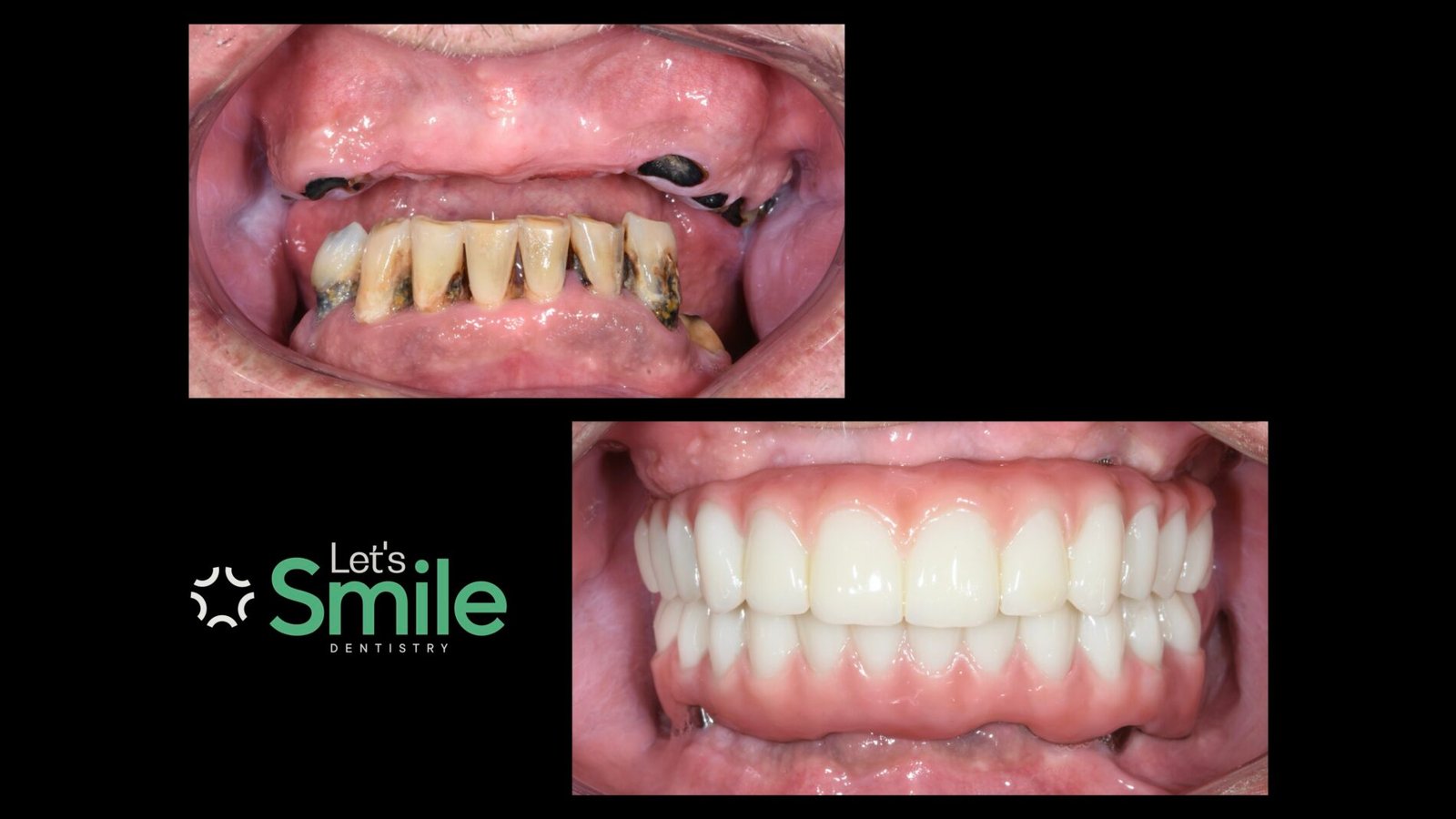
The implants vs. the teeth: what usually wears out first?
In most cases, the prosthetic teeth wear out before the implants do. Think of the implants as the anchors and the bridge as the functional surface that takes daily chewing pressure. Over time, acrylic teeth may chip, stain, or wear down. Even high-end restorations can need adjustments.
This is especially relevant for patients comparing treatment plans. Lower-cost options may use materials that look good initially but require more maintenance in the years ahead. Premium materials can improve durability, esthetics, and long-term value, but no material is indestructible.
A well-made zirconia bridge often lasts longer than acrylic-based options, especially for patients who want greater strength and a more natural appearance. Still, the right choice depends on bite, anatomy, budget, and goals. The best treatment is not always the most expensive one. It is the one designed appropriately for your case and supported by a realistic long-term maintenance plan.
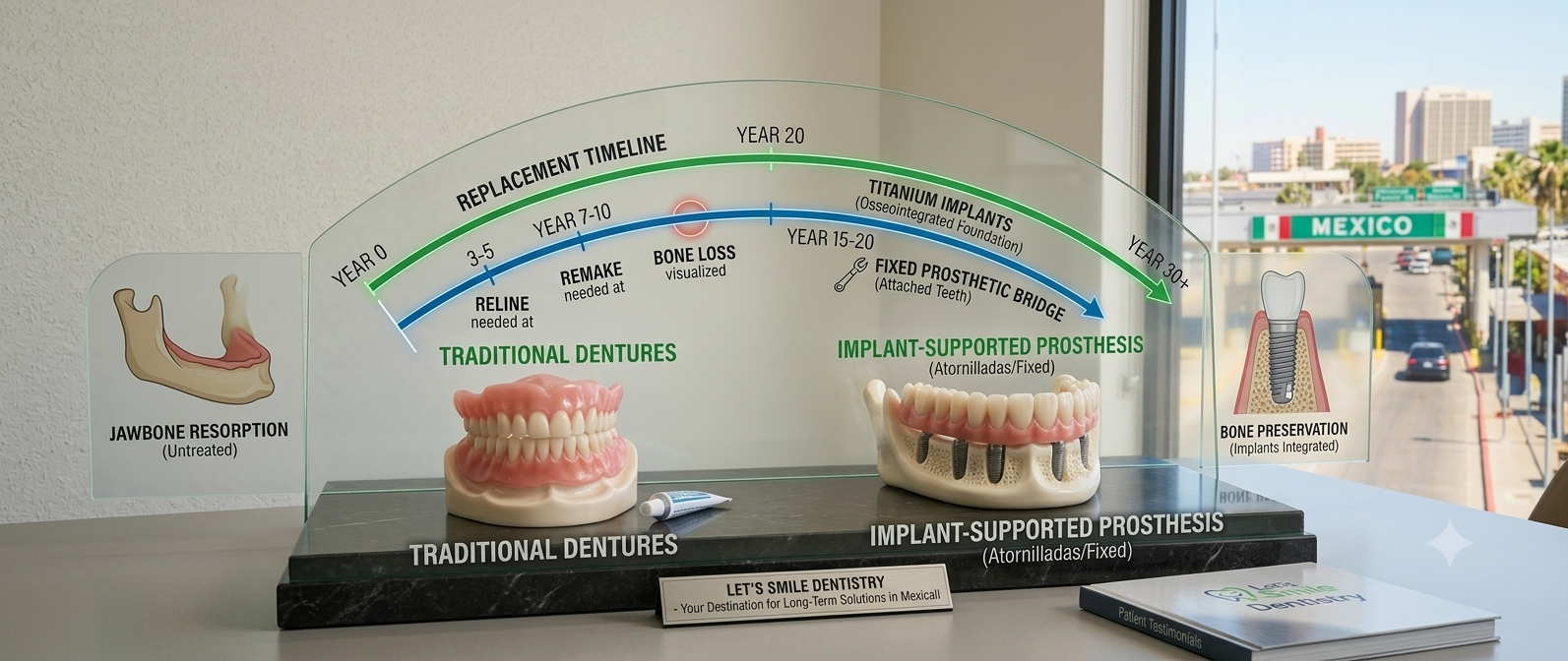
How long do full mouth dental implants last compared with dentures?
Compared with traditional dentures, full mouth dental implants usually offer a longer-lasting and more stable solution. Dentures often need relines, remakes, adhesives, and frequent adjustments as the jawbone changes shape. Because they sit on the gums rather than integrating with bone, they do not help preserve bone in the same way implants do.
That difference matters over time. When implants stimulate the bone, they can help reduce the shrinkage that commonly follows tooth loss. This supports facial structure, improves fit and function, and can make full arch treatment feel more like having real teeth. For many patients, that stability is just as valuable as the lifespan itself.
Dentures may still be the right option for some people, particularly when budget or medical factors limit treatment choices. But for patients seeking a fixed, more durable solution, full mouth implants are generally built for a much longer horizon.
What can shorten the life of full arch implants?
The biggest risks are usually not dramatic failures. More often, problems build gradually. Skipping maintenance visits, letting inflammation go untreated, grinding at night, or putting off a small repair can turn a manageable issue into a larger one.
Poorly planned treatment is another concern. If implants are placed without enough attention to bite alignment, soft tissue health, or load distribution, complications can appear earlier. This is why specialist-led care matters in full mouth reconstruction. Large cases require coordination between surgery, prosthetics, imaging, and long-term follow-up.
Travel patients should pay close attention to this point. Choosing care based on price alone can be costly if the practice does not provide detailed diagnostics, clear post-op guidance, or ongoing support. Patients coming from the US often want the savings of dental services in Mexico, but they also want clinical standards, reliable materials, and a team that plans beyond the surgery date. That is a reasonable expectation.
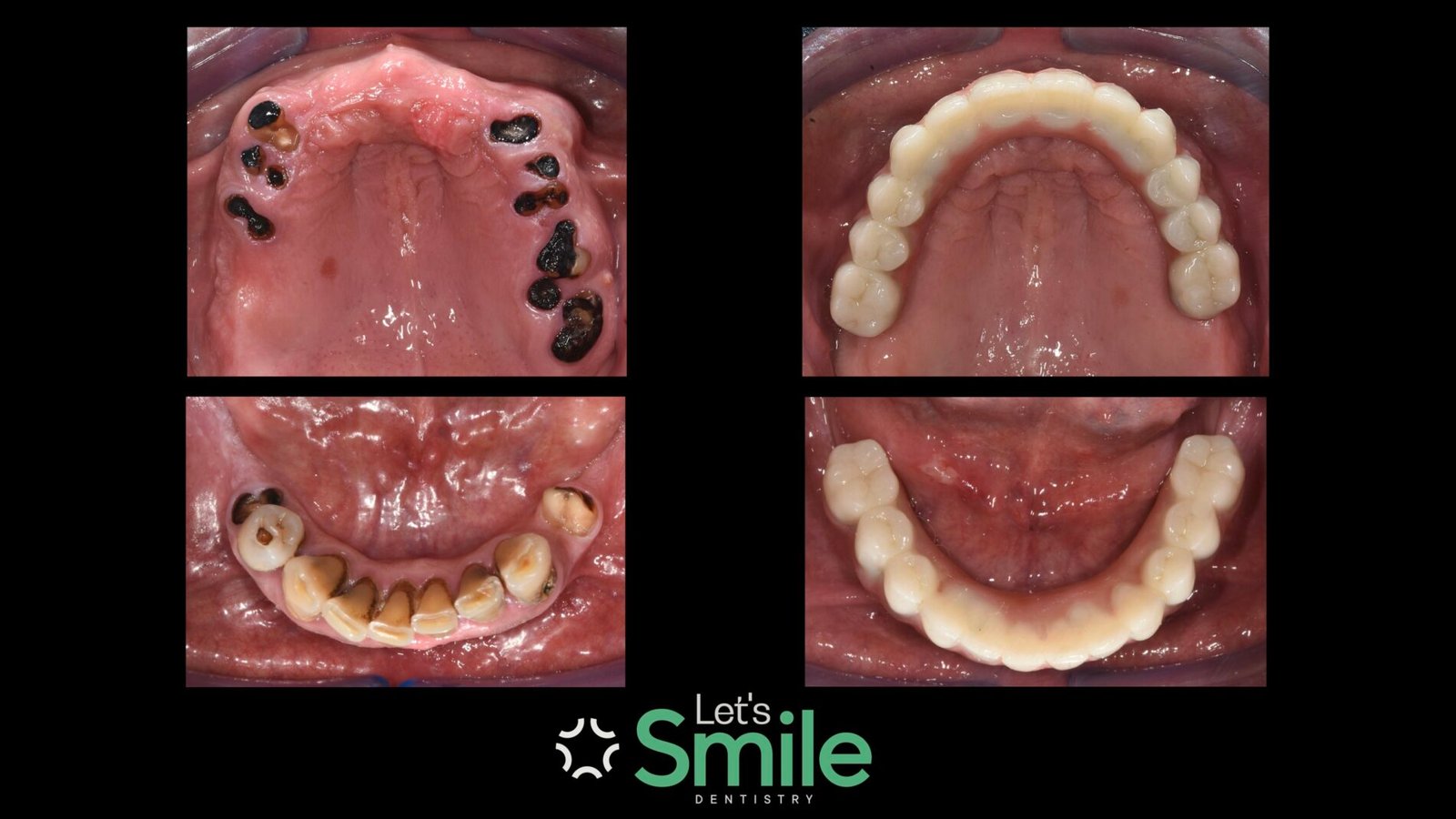
How to help your full mouth dental implants last longer
The patients who keep their implants longest usually do a few things consistently. They attend follow-up visits, keep the area meticulously clean, wear a night guard if recommended, and address changes early instead of waiting for discomfort. Even minor looseness, bite changes, or irritation should be evaluated.
Professional cleanings are important because full arch prosthetics can create areas where plaque accumulates more easily. Patients often need specific tools such as water flossers, super floss, or implant-friendly brushes to clean under the bridge effectively. A team should show you exactly how to do that, not just tell you to brush better.
Material choice and lab quality also affect long-term performance. Precision matters in how the bridge fits, how the bite is balanced, and how forces are distributed across the implants. At Let’s Smile Dentistry, that planning process is a key part of helping patients from the US feel confident not just about the procedure, but about how it will perform years later.

Is full mouth implant treatment worth it if parts may need replacement?
For many patients, yes. That is because replacement of a prosthetic bridge after many years is very different from starting over. If the implants remain healthy and stable, the existing foundation may still support a new restoration without repeating the entire surgical process.
That long-term value is often overlooked. Patients sometimes hear that a bridge may need replacement in 10 to 15 years and assume the whole treatment only lasts that long. In reality, keeping the implant foundation intact can preserve a great deal of function, comfort, and future cost savings.
The better question is not whether full mouth dental implants last forever. Very few things in dentistry do. The better question is whether they provide a durable, predictable solution that can support your health, confidence, and quality of life for many years. For the right candidate, with the right planning and maintenance, they often do.
If you are exploring dental tourism in Mexicali for full mouth implants, ask your provider not just how the surgery works, but what the long-term maintenance looks like, what materials are being used, and what kind of follow-up support you can expect. The strongest treatment plans are the ones built to last and managed that way from day one.