
A full-mouth implant quote in the U.S. can feel less like a treatment plan and more like a second mortgage. That is exactly why dental tourism Mexico for Americans has moved from a niche idea to a practical option for patients who need real work done – implants, crowns, veneers, root canals, emergency treatment, or a full smile restoration – without months of delay and inflated pricing.
The appeal is obvious, but serious dental treatment should never be reduced to price alone. If you are considering care in Mexico, the better question is not simply, “How much can I save?” It is, “Can I get specialist-led treatment, clear communication, quality materials, and a process that feels safe from start to finish?” For many Americans, especially those in California and Arizona, the answer can be yes.
Why dental tourism in Mexico for Americans keeps growing
Most patients do not start by looking for an international dental experience. They start by needing treatment they cannot comfortably afford at home. A few crowns become a more complex restorative case. One missing tooth turns into implant planning, bone loss management, and long-term bite issues. A cosmetic concern becomes a function problem.
At that point, many U.S. patients run into the same barriers: high fees, fragmented care between general dentists and specialists, limited scheduling, and treatment plans that are hard to fit into normal life. Mexico, particularly border cities with established dental districts, offers a different model. Patients can often access advanced treatment close to the border, work with bilingual teams, and complete care in a more coordinated way.
That does not mean every clinic is the same. The growth of dental tourism has created excellent options and weak ones. The difference is usually found in planning, credentials, technology, communication, and follow-through.
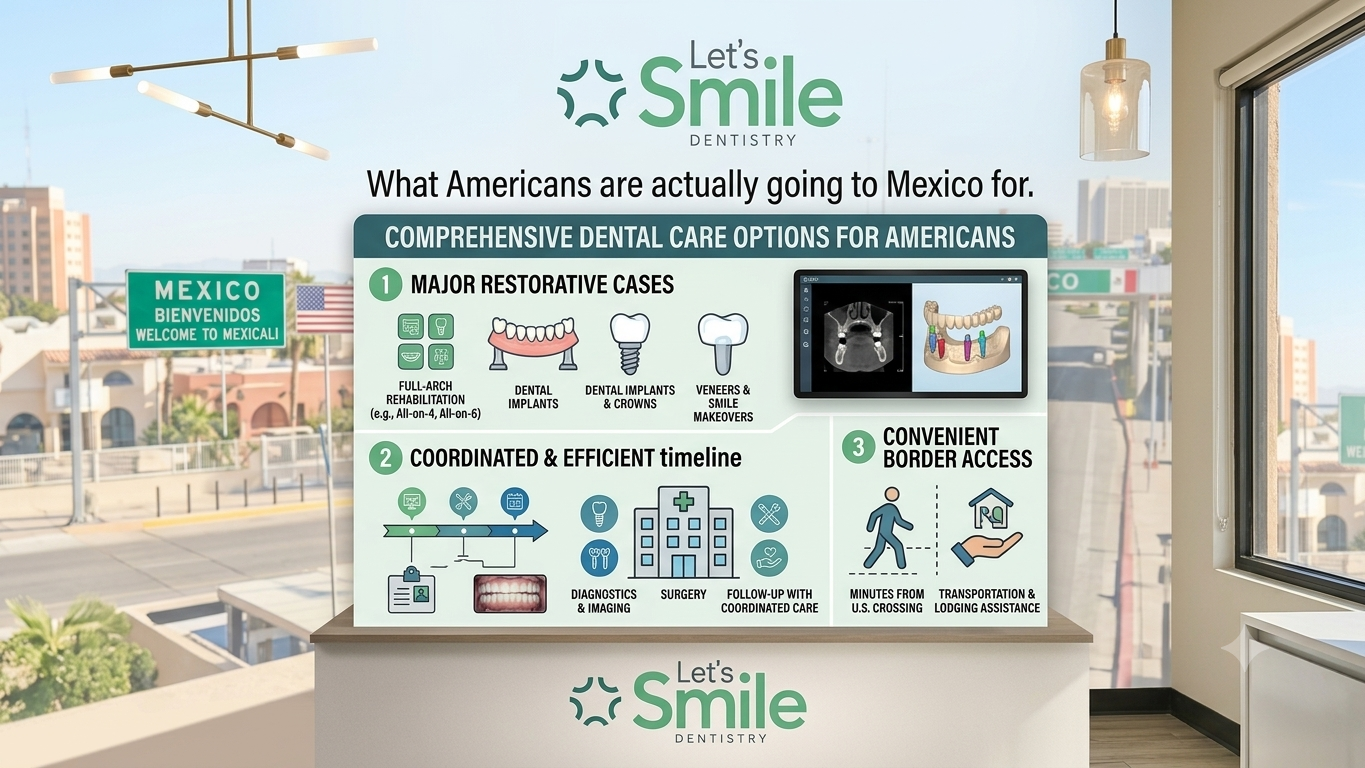
What Americans are actually going to Mexico for
The biggest savings usually happen on major restorative and cosmetic cases, not just routine cleanings. Dental implants are a common reason patients travel because even one implant in the U.S. can be expensive, and a full-arch restoration such as All-on-4 or All-on-6 can become financially out of reach for many families.
Crowns, bridges, veneers, root canals, and full-mouth rehabilitation are also common. Some patients come for emergency treatment because they need immediate care and do not want to wait. Others are rebuilding after years of postponed dentistry and want one clinic that can manage diagnostics, surgery, restorations, and follow-up with a more efficient timeline.
For families and retirees, convenience matters as much as savings. Border-based clinics can be especially attractive because they reduce the stress of long-distance international travel. If the clinic is minutes from the crossing and helps with transportation or lodging coordination, the experience becomes far more manageable.
What makes a clinic worth trusting
If you are comparing providers, focus on how the clinic handles complex care, not just how low the quote looks. Affordable dentistry is valuable only when the standards behind it are strong.
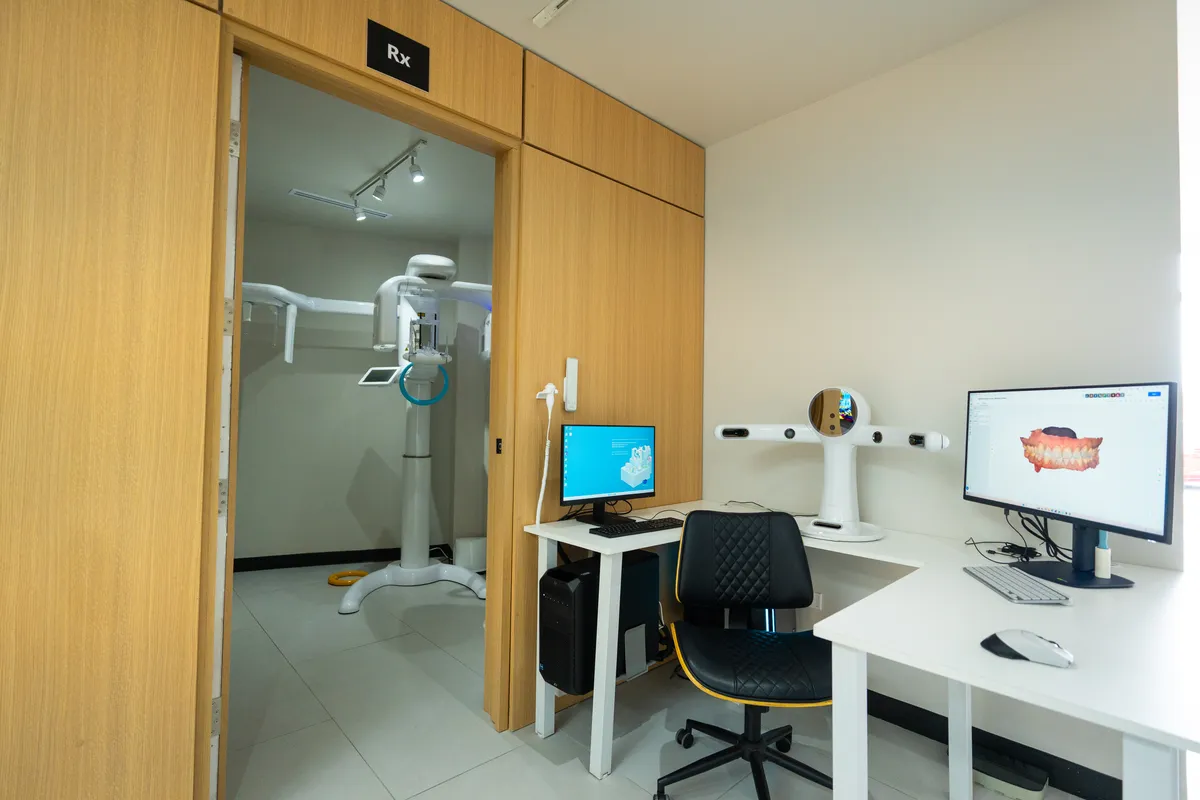
Start with the clinical model. A quality dental tourism practice should be clear about who performs specialist procedures, how treatment is planned, and what technology supports diagnosis and execution. Implant cases, full-mouth rehabilitation, and cosmetic redesigns require more than technical skill. They require careful sequencing, bite analysis, imaging, and a restorative plan built for long-term function.
Materials matter too. Americans considering cross-border care often worry that lower pricing must mean lower quality. In strong clinics, that assumption does not hold. The better explanation for lower fees is a different cost structure, not necessarily inferior care. Even so, patients should ask what brands and materials are being used for implants, crowns, temporary restorations, and final prosthetics.
Communication is another major trust signal. If your consultation feels vague, rushed, or overly sales-driven, take that seriously. You should understand the diagnosis, the treatment phases, the expected timeline, the healing process, and the final cost before moving forward.
The real trade-offs of dental tourism in Mexico
Dental tourism Mexico for Americans can be an excellent choice, but it is still a choice with trade-offs. Good clinics will acknowledge that instead of pretending every case is simple.
Travel adds logistics. Even in a border city, you are coordinating time off work, transportation, documentation, and recovery. Some procedures require multiple visits, especially implants that need healing before final restoration. If you live farther from the border, the savings can still be substantial, but the planning matters more.
Follow-up is another consideration. A filling or crown adjustment may be easy to address locally, but larger cases should be planned with post-treatment care in mind. The best cross-border clinics think about this early. They explain how many visits are likely, what can be completed in each phase, and what support is available after you return home.
Patient expectations also matter. If you are seeking a full smile makeover, the right result depends on both clinical feasibility and good planning around aesthetics, bite, bone support, and tissue health. Fast treatment is helpful. Rushed treatment is not. There is a difference.
Why border location changes the experience
Not all dental tourism models feel the same. Flying deep into another country for treatment may work for some patients, but many Americans prefer a location that keeps care close and manageable.
That is one reason Mexicali stands out. A clinic located minutes from the border can reduce many of the concerns patients have before their first visit. Travel is more predictable. Family members can accompany the patient more easily. Multi-visit treatment plans feel realistic instead of disruptive.
This is where concierge-style support becomes more than a nice extra. Help with transportation, scheduling, bilingual communication, and lodging coordination can remove the friction that often stops patients from moving forward. For major procedures, that kind of structure matters. It allows patients to focus on treatment and recovery rather than trying to organize every detail alone.
How to compare options without getting overwhelmed
Most patients narrow their search too quickly by looking at price first and everything else second. A better approach is to compare overall value.
Look at whether the clinic offers comprehensive diagnostics, specialist-led care, modern imaging, transparent pricing, and a realistic treatment sequence. Pay attention to how they discuss your case. Are they explaining options clearly? Are they talking about function and long-term success, or only about cosmetics and discounts? Are they preparing you for healing time and maintenance, or making the process sound effortless?
Reviews and before-and-after cases can be helpful, but they should support the bigger picture rather than replace it. The strongest providers do not rely on marketing language alone. They show you how the treatment is planned, who is responsible for each phase, and what standards guide the work.
For Americans seeking serious restorative treatment, that level of transparency can make all the difference. It turns the experience from a gamble into a decision based on evidence, process, and trust.
A patient-centered model matters more than a cheap quote
Patients often assume dental tourism is mainly about saving money. In reality, the best version of it is about access. It gives people a path to treatment they may have postponed for years because of cost, complexity, or fear.
A clinic that understands American patients knows the decision is emotional as well as financial. You may be worried about pain, embarrassed about your teeth, uncertain about travel, or frustrated after multiple opinions in the U.S. A patient-centered practice responds with honest, expert guidance and a process that feels organized from the first consultation.
That is why many patients choose specialist-driven clinics like Let’s Smile Dentistry in Mexicali. The value is not just lower fees. It is the combination of advanced care, clear communication, quality standards, and support built around cross-border patients who want treatment done well.
If you are considering dental care in Mexico, take your time and ask better questions. The right clinic will welcome that. When the answers are clear, the treatment plan makes sense, and the logistics feel manageable, dental tourism stops sounding risky and starts looking like what it should be – a smart, informed path to getting your health and confidence back.