
Most people who start looking into a smile makeover are not chasing perfection. There is usually one thing that bothers them, a chipped front tooth, years of staining, a gap that shows up in every photograph, and somewhere along the way the search turns into a catalog of veneers, crowns, whitening and packages priced by the tooth.
Mexico enters the picture for the same reason it does with implants. The same work often costs a fraction of what it does in the United States, and that part is true. What gets lost is that a smile makeover is not one procedure. It is a plan, and the quality of the plan matters more than the price of any single piece of it.
This guide covers what a smile makeover can and cannot change, how the options compare, what actually moves the cost, how long treatment takes, and the questions worth asking any clinic before you book a trip.
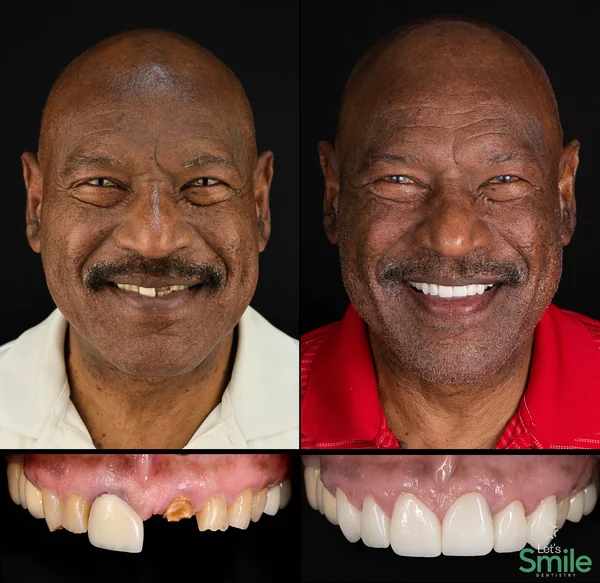
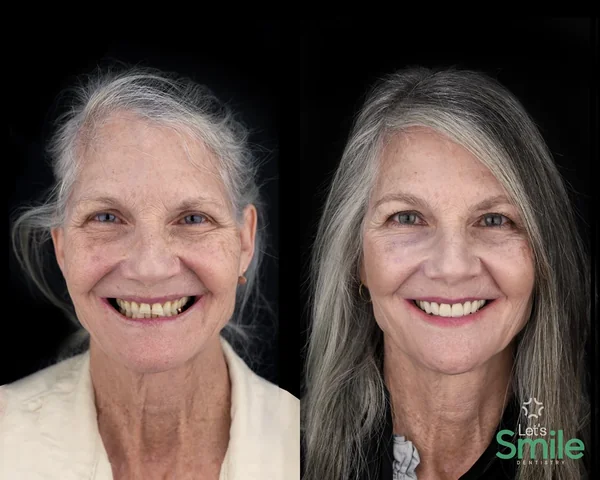
Real Patient Smile Transformations
Cosmetic results depend on individualized smile architecture rather than generic bulk sets. View verified before-and-after cases of custom veneers and crowns.
Explore Crowns & Veneers Gallery →
What a smile makeover actually is, and what it is not
A smile makeover is a combination of treatments chosen to change how your teeth look, planned together instead of one at a time. It might be whitening plus two bonded edges. It might be eight veneers. It might be crowns on teeth that were already damaged, plus an implant where one is missing.
What it is not is a product you order by quantity. The number of teeth involved is the result of an examination, not something you pick in advance from a price list.
It also has limits worth knowing early. Cosmetic work changes the surface of a smile. It does not fix gum disease, an unstable bite, or an untreated infection, and a careful clinic will not build new surfaces on top of any of those. If you are quoted a full set of veneers before anyone has looked at your gums or taken images, you are being sold a package, not a plan.
An honest assessment comes before any catalog
Before a clinic can tell you what your smile makeover involves, four things need to be on the table.
- Oral health. Gum condition, decay, failing restorations, any infection. These are treated first, always.
- Your bite. How your teeth meet when you close and when you chew. A bite that grinds or loads unevenly will chip porcelain, and rebuilding front teeth without accounting for it is how people end up back in the chair.
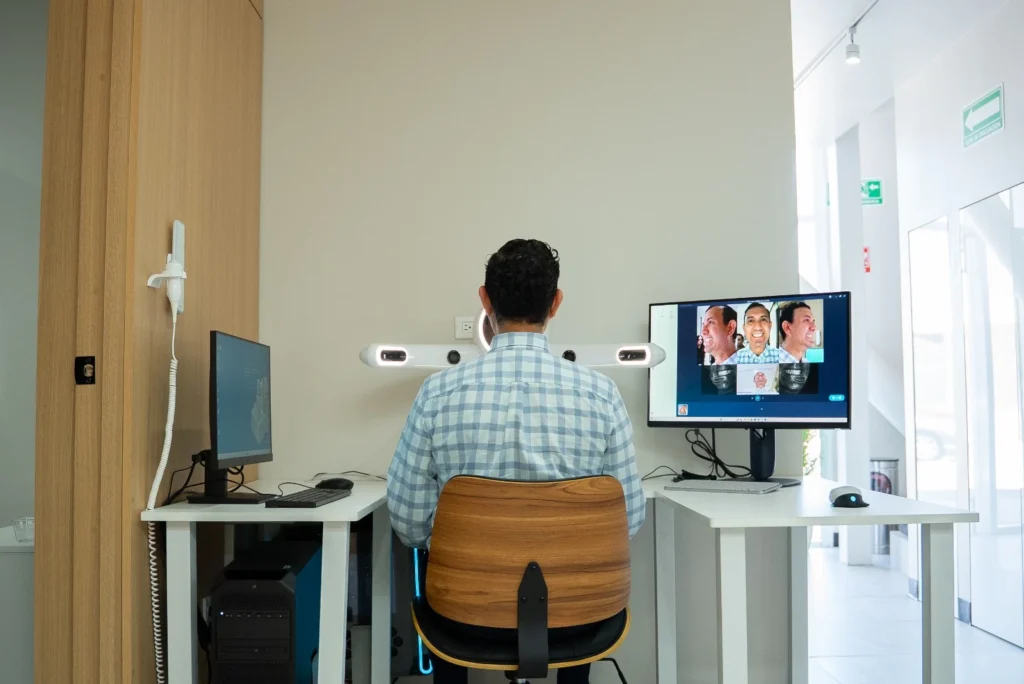
- Records. Photographs, an intraoral scan, and imaging when the case involves implants or significant restorative work. At Let’s Smile Dentistry this includes a facial scan, so teeth are designed in the context of your face rather than in isolation.
- What you actually want. Whiter, straighter, longer, more even, less gum showing. Those are different goals with different treatments, and naming them precisely changes the plan.
If all four are covered, you will get a proposal you can evaluate. If they are not, you are getting a guess.
Compare your options
Most smile makeovers are built from a handful of treatments. Which one is right depends on how much needs to change, and how much tooth structure you are willing to give up to change it.
One point worth sitting with: orthodontics is often the option that lets you keep the most tooth. Moving a tooth into the right position can remove the need to grind it down and cover it. It takes longer, which is exactly why it gets skipped, and that is a trade worth making on purpose rather than by default.
What actually drives the cost
Smile makeover prices in Mexico are usually quoted per tooth, which makes comparison harder than it looks. Two quotes for eight veneers can differ by thousands and both be reasonable, or one can be cheap for a reason.
Complete Rehabilitation Packages
Some patients are better served by a complete rehabilitation package rather than paying separately for every tooth or restoration. When treatment is planned as a coordinated whole, package pricing can offer significant savings while addressing the entire functional and cosmetic problem.
- How many teeth are treated. The most obvious factor, and the one that should be decided clinically rather than commercially.
- Material. Layered porcelain, pressed ceramic and zirconia behave differently in strength and in how they handle light. What suits a front tooth is not what suits a molar.
- Where the restoration is made. A digital workflow with CAD/CAM design and a coordinated laboratory is not the same as sending the case to whichever lab is cheapest that month.
- Preparatory treatment. Gum therapy, a root canal, replacing a filling under a crown. This is the part most often missing from a first quote and added later.
- Diagnostics. Scans, imaging and design time. Some clinics include this, some bill it separately.
- Revisions. Whether the try-in stage and adjustments are included, and what happens if you are not happy with the provisional.
Ask for the estimate in writing and itemized, with what is included and what is not. A clinic that has planned the case properly can produce that document without difficulty. A clinic that cannot is telling you something useful.
How long it takes, and how many trips
A smile makeover is not usually a single visit treatment, and a clinic promising a complete transformation in one afternoon is describing something more limited than what you are picturing.
Plan for the Right Timeline
Patients traveling from the northern United States or Canada often plan to stay four to six days for a complete smile makeover. Depending on the case, treatment may be completed in one visit when the patient has all of their teeth and they are healthy and well positioned. More complex cases involving extractions, root canals, or implants usually require natural-looking temporary restorations while the final work is being completed. Patients typically return four to six months later for their second visit and final smile makeover.
- Remote review. You send photographs and any records you have. The clinic tells you whether the case looks straightforward, complex, or impossible to assess without seeing you.
- First visit. Full examination, scans and imaging, treatment plan, and any preparatory work. Preparation and provisionals often happen in this visit.
- Design and laboratory. Your restorations are designed and fabricated. You wear provisionals during this stage, which is also your chance to say what you want changed.
- Second visit. Try-in, adjustments and placement of the final restorations.
- Follow-up. A review once things have settled, and remote follow-up after you are home.
For patients driving from California or Arizona, Mexicali makes this sequence easier than most dental tourism destinations, because the second trip is a drive rather than a flight. The clinic sits about three minutes from the East Port of Entry.
The question worth asking: how much tooth do you keep?
This is the part that rarely shows up in smile makeover marketing, and it is the one decision you cannot undo.
Veneers and crowns require removing enamel. Once that enamel is gone, the tooth will need to be covered for the rest of your life. Whatever is on it now will eventually need replacing, and the tooth underneath will not be a candidate for something less invasive later.
That is not an argument against veneers. For the right case they are an excellent treatment, and often the only way to get the result you are asking for. It is an argument for asking one specific question before you agree to anything:
“How much of my natural tooth is being removed, and is there a more conservative option that gets me close to the same result?”
A clinic that answers that directly, and is willing to talk you out of treating teeth that do not need it, is showing you how it practices. A clinic that treats every case as the same number of veneers is showing you something too.
How to evaluate a clinic before you travel
Distance removes your ability to drop in and ask a question, so the evaluation has to happen before you go.
- Who is doing the work. Ask for the specific clinician and their training in restorative and cosmetic dentistry, not just the clinic name. See Dr. Tomás García’s credentials.
- What records they take. A clinic planning from photographs alone is not planning.
- Whether you see a design first. Digital design lets you review a proposed result before a single tooth is touched.
- Materials and laboratory. Ask what will be used and where it will be made.
- Sterilization. Ask what the protocol is, and expect a specific answer rather than a reassurance. Read our guide on safety and sterilization standards in Mexico.
- What is in writing. The plan, the itemized estimate, and the terms if something needs adjusting or replacing.
- What happens afterward. Who you contact from home, and what is covered.
You can ask every one of these by email or WhatsApp before you commit to a trip. The answers, and how readily they arrive, tell you most of what you need to know.
Planning a visit to Mexicali
Mexicali is a practical choice for patients in Southern California and Arizona for one specific reason: you can drive. The clinic is roughly three minutes from the East Port of Entry, which turns a second appointment into a day trip rather than a flight and a hotel.
- Which crossing you will use, and what documentation you need.
- Whether you are driving yourself or taking the clinic shuttle from the border.
- Where you are staying if the visit runs longer than a day.
- Who your point of contact is at the clinic, in English.
Let’s Smile Dentistry coordinates border shuttles, lodging and a bilingual patient coordinator through our dedicated dental tourism program. That is logistics rather than dentistry, but for a treatment that takes more than one visit it is often the difference between a plan you finish and one you abandon.
Smile makeover in Mexico: common questions
What treatments are included in a smile makeover?
Whatever the examination indicates. Commonly whitening, bonding, veneers or crowns, and sometimes orthodontics or an implant when a tooth is missing or badly out of position. The combination is chosen for your case, not from a fixed package.
How is a smile makeover plan personalized?
Through records. Photographs, an intraoral scan, imaging, and in our case a facial scan, reviewed alongside what you want changed. The design is then shown to you before treatment starts, so you approve a proposed result rather than a description of one.
What affects the cost of a smile makeover in Mexico?
The number of teeth treated, the material chosen, the laboratory and workflow behind the restoration, any preparatory treatment your mouth needs first, diagnostics, and whether adjustments and try-ins are included. Ask for it itemized in writing.
How many trips to Mexico will I need?
Most restorative smile makeovers involve at least two visits, one for examination and preparation and one for the final placement, with laboratory time in between. Cases that need gum treatment, orthodontics or implants take longer and are planned in stages.
When are veneers the right choice instead of crowns?
Veneers cover the front surface and suit teeth that are structurally sound but wrong in color or shape. Crowns cover the whole tooth and are chosen when the tooth is already damaged or heavily restored and needs the strength. It is a clinical decision, not a preference.
Can I keep my natural teeth?
Often more of them than you expect. Whitening, bonding and orthodontics remove little or no tooth structure, and a good treatment plan uses the least invasive option that reaches your goal. Ask what the conservative alternative would look like before agreeing to preparation.
Start with an assessment, not a quote
If you are considering a smile makeover, the most useful first step is not a price. It is finding out what your teeth actually need, and what your options really are.
Send photographs and any records you have. Dr. Tomás García and the team at Let’s Smile Dentistry will tell you what is realistic for your case, which treatments are worth considering, and what each one involves, before you plan a trip.
Ready to Explore Your Smile Options?
Dr. Tomás García and our cosmetic dental team in Mexicali provide comprehensive remote evaluations to help you make an informed decision.